A regulator can look perfect on the boat and still be overdue for attention. Salt, sand, sunscreen, humid storage, and a busy travel schedule all take a toll on the equipment that delivers your breathing gas. For regulator repair in Sint Maarten divers can rely on, the goal is not simply getting a regulator to breathe again. It is making sure it performs predictably before you descend on a reef, wreck, or deep blue wall.
Your regulator is life-support equipment. Treating it as such protects your comfort underwater, helps prevent a dive-day interruption, and gives you one less thing to worry about when the Caribbean conditions are calling.
The best time to service a regulator is before it develops a problem. Most manufacturers set a recommended service interval, commonly based on time, number of dives, or both. Your regulator manual and service history should guide the decision, especially if maintaining warranty coverage matters to you.
That said, conditions matter as much as the calendar. A regulator used heavily during a season of boat diving, stored aboard a yacht, or exposed to repeated saltwater rinses may deserve earlier attention than one that has spent most of the year clean, dry, and protected at home. Sint Maarten's warm marine environment is ideal for diving, but it is not gentle on neglected equipment.
Service is also the sensible choice after a long period in storage. Internal components can age even when the regulator has not been in the water. O-rings may dry out, seats can take a set, and moisture left in the system can contribute to corrosion.
A regulator does not need to fail completely to tell you something is wrong. A change in breathing performance is enough reason to have a trained technician inspect it. Do not try to compensate for a questionable regulator by breathing more carefully or planning a shallower dive.
Watch for signs such as a persistent free-flow, increased effort when inhaling, bubbles escaping from a hose connection, a second stage that feels inconsistent, or a first stage that hisses after the cylinder valve is opened. Water entering the second stage, a damaged mouthpiece, cracked hoses, or corrosion around fittings also deserve prompt attention.
A pressure gauge that reads erratically is a separate concern, but it belongs in the same pre-dive conversation. Your regulator, alternate air source, hoses, SPG, and cylinder connection work together as a system. If one component raises questions, have the full setup evaluated.
There is a difference between a harmless surface splash and a regulator that has been submerged without its dust cap properly secured. If water may have entered the first stage, do not connect it to a cylinder and hope for the best. Bring it in for assessment before the next dive.
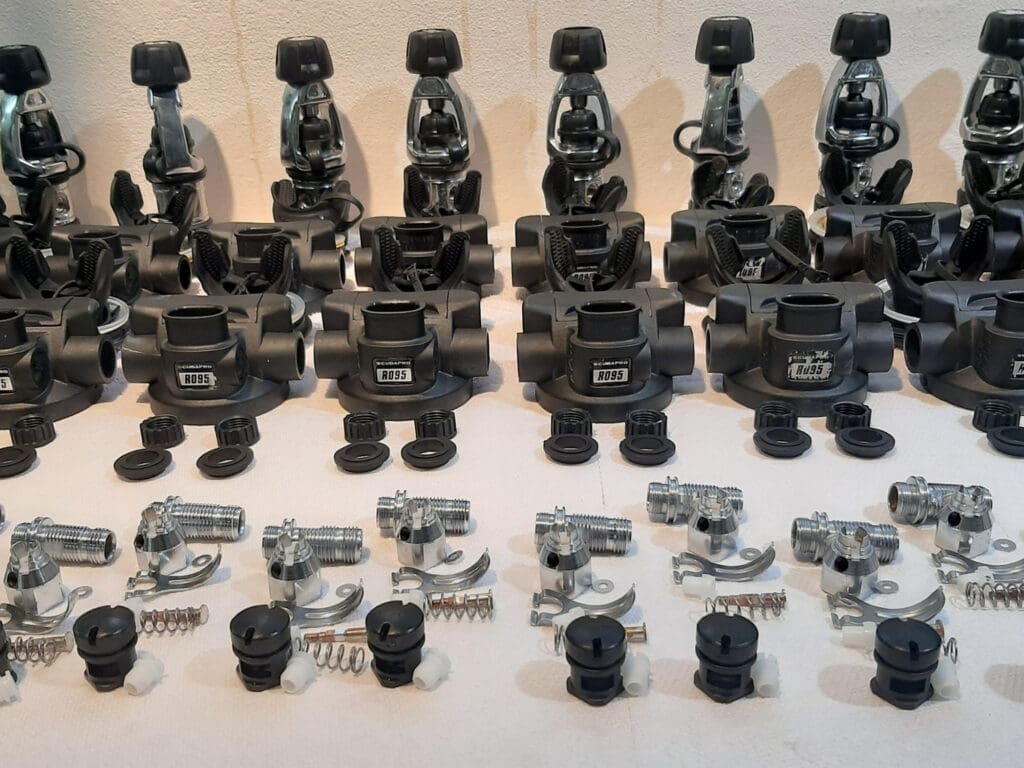
Professional service is more than a quick rinse, a visual check, or replacing one visibly worn part. A proper inspection begins with the regulator's condition and service history. The technician checks the first stage, second stage, alternate air source, low-pressure inflator hose, high-pressure hose, fittings, and gauges for wear, corrosion, leaks, and damage.
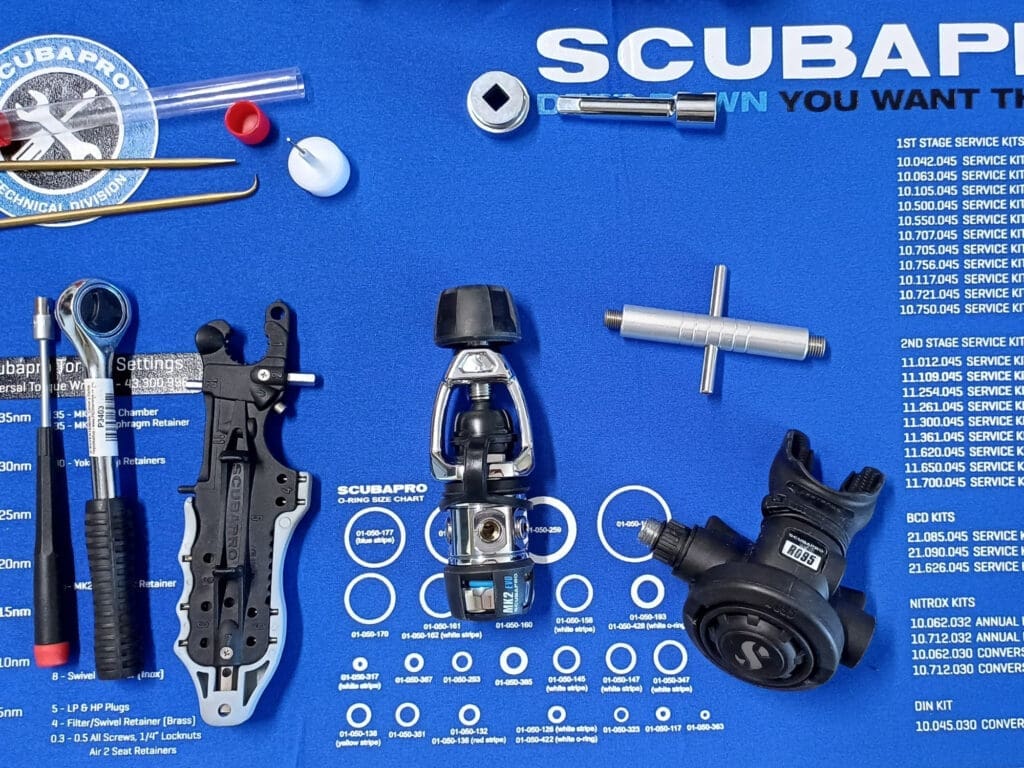
When an overhaul is needed, the regulator is disassembled, cleaned using appropriate methods, and rebuilt with the correct manufacturer-approved service parts where applicable. Internal pressures and breathing performance are then adjusted and tested. This work requires the right tools, current technical knowledge, and the parts specified for that model.
That is why DIY regulator repair is a poor shortcut. A regulator may appear to function at the surface after an improvised fix, yet still deliver poor performance under pressure or at depth. Even experienced divers should leave internal service and calibration to an authorized technician.
At The Scuba Shop SXM, factory-authorized regulator service gives resident divers, visitors, and yacht crews access to knowledgeable support without separating equipment care from the rest of their island plans. If your gear needs attention before a trip, bring it in early rather than waiting for the morning of departure.
Not every issue calls for a full overhaul. A torn mouthpiece, worn hose protector, missing dust cap, or leaking connection may have a straightforward solution. On the other hand, a regulator with an unknown service history, corrosion, repeated free-flowing, or inconsistent intermediate pressure may need a complete service.
The trade-off is simple: a smaller repair can address a clear, isolated issue, while a full service provides a broader reset for equipment that is overdue or showing multiple symptoms. A technician can help you decide after inspecting the regulator rather than guessing from one symptom alone.
Good regulator habits between services reduce wear and protect your investment. After each dive day, rinse the regulator thoroughly in fresh water with the dust cap clean, dry, and firmly in place. Do not press the purge button while the second stage is submerged unless the regulator is pressurized. That can push water into the system.
Allow the equipment to dry out of direct sun before packing it away. Avoid dragging hoses across hot decks, stuffing the second stage into sand, or lifting a cylinder by the regulator yoke or DIN connection. On a crowded boat, a dedicated padded bag or protected gear area is far better than leaving delicate components under tanks and weight belts.
For travelers, carry your regulator in your hand luggage when practical. Baggage handling can put unnecessary stress on hoses, gauges, and second stages. Before leaving home, inspect the mouthpiece, hose routing, and dust cap, then test the regulator briefly on a cylinder if you have access to one.
Yacht owners and crews should be especially mindful of storage. Salt air and enclosed lockers create conditions where corrosion can develop quietly. Store regulators dry, protected from chemicals and fuel vapors, and away from loose gear that can crush or kink hoses.
A professional service schedule is your foundation, but a brief check before every dive remains essential. Once the cylinder is secured and the valve is opened slowly, listen for leaks. Watch the pressure gauge settle, take several breaths from the primary and alternate second stages, and confirm the inflator connection operates normally.
Pay attention to breathing feel, not just whether air comes out. The regulator should deliver air smoothly without excessive resistance, fluttering, or a tendency to free-flow. Check that hoses are not sharply bent and that your alternate air source is easy to reach and properly secured.
If something feels different from your last dive, pause. A missed dive is disappointing; a regulator concern underwater is a much bigger problem. Sint Maarten offers plenty of opportunities to get back in the water once your equipment is ready.
Visitors arriving with a regulator issue often assume the trip is over. It does not have to be. Depending on availability and your dive plans, quality rental equipment can keep your vacation moving while your personal setup is inspected or serviced.
This can be the practical choice when time is limited, particularly for travelers booked on guided dives, continuing education, or a family snorkeling and diving day. Be honest about your experience level and preferences when arranging rental gear. A proper fit and familiarization before departure make a meaningful difference in comfort.
Experienced divers may prefer their own regulator, especially for long dives or specialized configurations. That is understandable. But if your regulator is showing symptoms, using properly maintained rental equipment is the safer decision than gambling on gear that needs professional attention.
The best dive gear disappears from your attention underwater. You breathe easily, check your surroundings, and focus on the reef life, your buddy, and the moment. That confidence starts long before the boat leaves Simpson Bay.
Schedule service according to your manufacturer's guidance, respond early to changes in performance, and give your regulator the fresh-water care it deserves after every saltwater day. A well-maintained regulator lets you spend your island time where it belongs: comfortably underwater, ready for the next unforgettable descent.