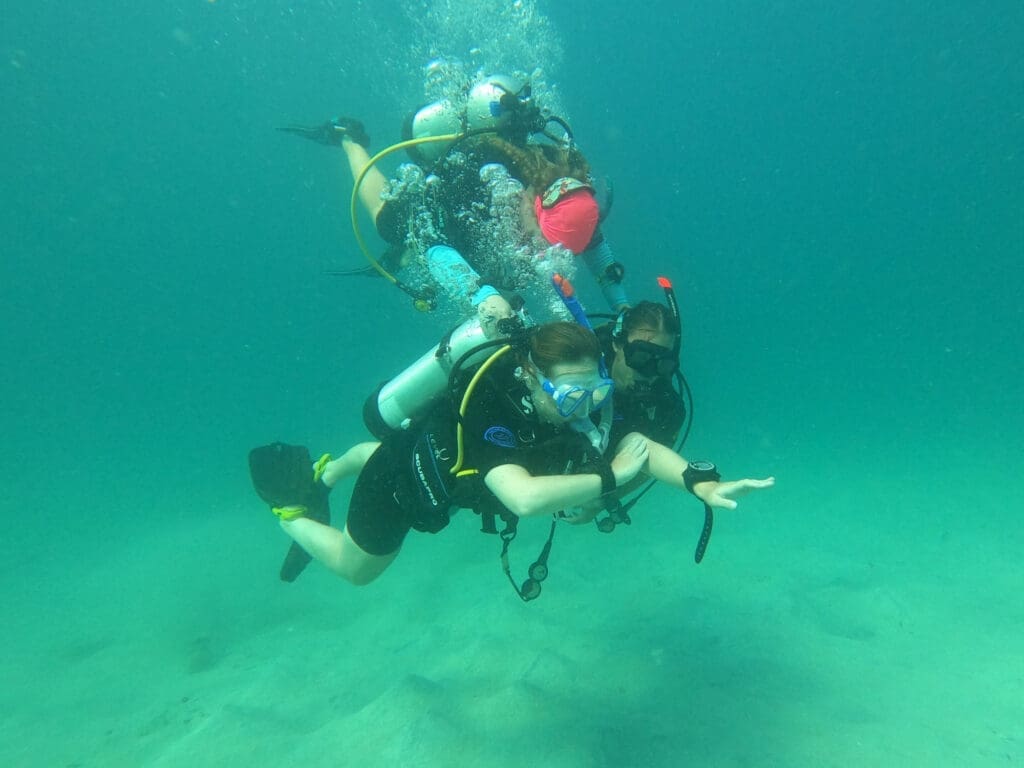
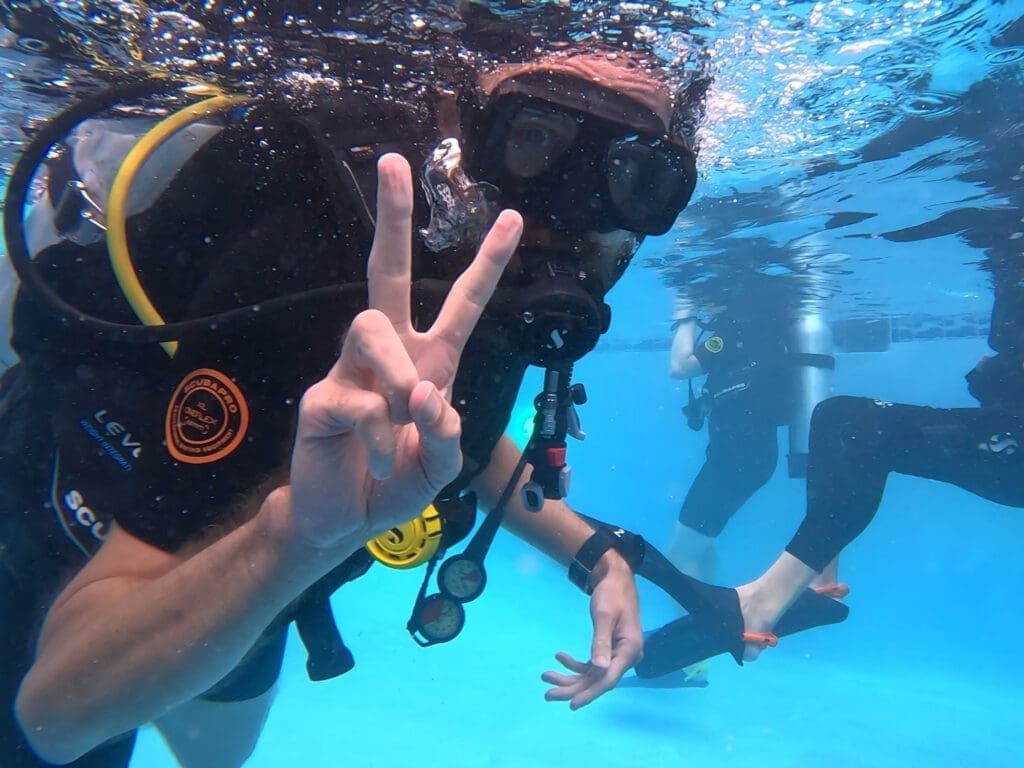
A PADI Divemaster course in Sint Maarten is not simply a longer certification. It is the point where you stop thinking only about your own buoyancy, air, and underwater route and start learning how to support the entire dive operation. You may be helping a new diver settle into the water one day, mapping a reef the next, and assisting an instructor with student skills after that.
For divers who want to turn serious experience into professional-level capability, Sint Maarten offers a compelling classroom. The island’s warm water, varied marine sites, boat-diving environment, and steady flow of visiting divers create opportunities to practice the judgment, communication, and awareness that good dive leaders rely on every day.

PADI Divemaster is the first professional-level PADI rating. The course develops your ability to supervise recreational diving activities, assist with training, guide certified divers, and help keep day-to-day operations organized and safe. Those are meaningful responsibilities, so the program asks for more than passing a few knowledge reviews.
You will build a deeper working understanding of dive theory, risk management, emergency readiness, equipment handling, and environmental responsibility. Just as importantly, you will learn the practical rhythm of a dive center: preparing equipment, anticipating guest needs, conducting briefings, managing groups, and responding calmly when plans change.
The strongest Divemaster candidates are not always the divers with the most dramatic travel logs. They are the ones who are teachable, observant, dependable, and willing to do the unglamorous work well. Carrying tanks, rinsing gear, checking fit, and helping someone feel comfortable before a first ocean dive are all part of serving divers professionally.

A professional course should give you more than pool sessions and simulated scenarios. In Sint Maarten, training can take place in the real conditions where dive leaders work: from boats, around changing sea states, with divers of different ages, skill levels, and vacation schedules.
That variety matters. Guiding a group of confident, well-traveled divers requires a different approach than assisting students who are working through their first open-water skills. Both experiences sharpen your communication. You learn when a detailed explanation is useful, when a short clear instruction is better, and when a diver simply needs a little time and encouragement.
The local underwater environment adds another layer to the experience. Reef dives, marine-life encounters, and wreck-oriented exploration help you practice site awareness and responsible diver behavior in a setting people have traveled to enjoy. A Divemaster’s job is not to rush a group through a site. It is to help create a safe, relaxed, memorable dive while protecting the environment that makes the experience possible.
As a PADI 5-Star Dive and ECO Center, The Scuba Shop SXM brings professional training together with guided diving, equipment support, and a conservation-minded approach. That combination lets candidates see how a capable dive operation works beyond the course materials.

Before starting a PADI Divemaster course, you need a foundation of training and experience. Candidates must be at least 18 years old and hold PADI Advanced Open Water Diver and Rescue Diver certifications, or qualifying equivalent credentials. Current Emergency First Response primary and secondary care training, completed within the previous 24 months, is also required. A physician signed Diver Medical Form is required as this is a professional level course.
You will need at least 40 logged dives to begin the course and at least 60 logged dives to earn certification. Those dives must include experience in several relevant areas, such as night diving, deep diving, and underwater navigation.
These requirements are not hurdles for their own sake. Rescue-level training and logged experience give you context for the professional tasks ahead. If you are still building dives or need to refresh first aid skills, it may make more sense to plan a progression rather than rush into Divemaster training. The goal is to arrive ready to learn, not merely eligible to enroll.

The right course pace depends on where you are starting, how much time you can spend on the island, and what you hope to do after certification. Some candidates are local or seasonal residents who can train over a longer period while gaining broad operational exposure. Others arrive with strong recent experience and dedicate a focused block of time to their professional development.
A compressed schedule can work for a well-prepared candidate with current skills, organized dive logs, and the ability to concentrate fully on training. A longer format can provide more time to absorb feedback, repeat unfamiliar tasks, and see a wider range of real-world dive-center situations. Neither route is automatically better. The best choice is the one that supports genuine competence.
Divemaster training combines academic development, watermanship, practical workshops, and hands-on application. You will revisit subjects such as physics, physiology, equipment, decompression theory, and the dive environment at a higher level than in recreational courses. The purpose is not to turn every candidate into a scientist. It is to help you make informed, professional decisions and explain key concepts clearly.
In-water assessments develop reliable demonstration-quality skills, stamina, navigation, search and recovery abilities, and problem-solving. You may practice organizing a search, assisting with diver management, preparing an emergency assistance plan, or guiding certified divers through a site while maintaining group awareness.
There is also a leadership side that cannot be fully captured on a checklist. Briefings need to be accurate without becoming overwhelming. Group control should feel calm, not controlling. A good Divemaster watches for small issues before they become larger ones: a loose fin strap, a diver who seems anxious, a camera user falling behind, or a weather shift that calls for a revised plan.
As a dive professional, you should understand the equipment divers depend on and recognize when something needs attention. That does not mean every Divemaster is expected to perform advanced repairs. It does mean you should be comfortable checking setup, identifying obvious problems, discussing fit, and knowing when gear needs qualified service.
Training in a full-service environment is useful because equipment knowledge is connected to real operations. You see why careful inspection, cylinder handling, maintenance records, and properly fitted rental equipment matter. You also learn that professional credibility comes from being honest about what you know and quick to involve the right technician when a life-support item needs service.


Confidence is valuable underwater, but it should be earned and flexible. The best emerging dive leaders can make a decision, explain it clearly, and revise it when new information appears. They remain approachable to guests while respecting standards, local conditions, and the limits of the group.
Consider your motivation before committing. If you want to lead dives seasonally, gain experience before instructor training, work around the water, or become a more capable ambassador for diving, Divemaster can be an excellent next step. If your primary goal is simply to log more recreational dives, guided diving and continuing education may offer a better fit for now.
The course is demanding because the role matters. Yet it is also one of the most rewarding ways to see diving from a new perspective. You begin to notice the small actions that make guests feel safe, welcomed, and excited to return to the water.
Come prepared with recent diving experience, accurate logs, a willingness to accept feedback, and respect for the ocean. Those qualities will serve you long after your PADI Divemaster card is issued, whether your next chapter leads to professional work or simply makes you the diver others are glad to have on their team.